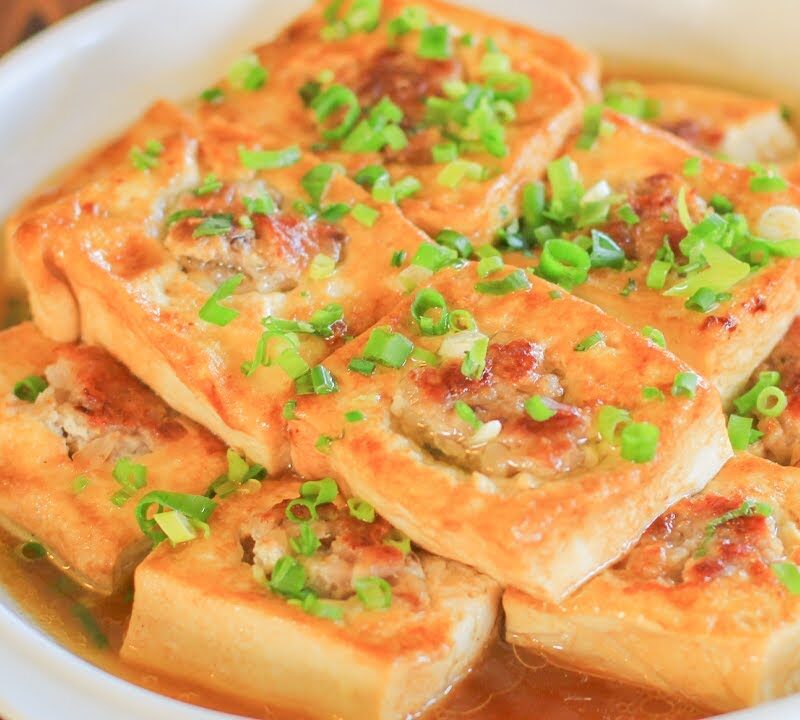
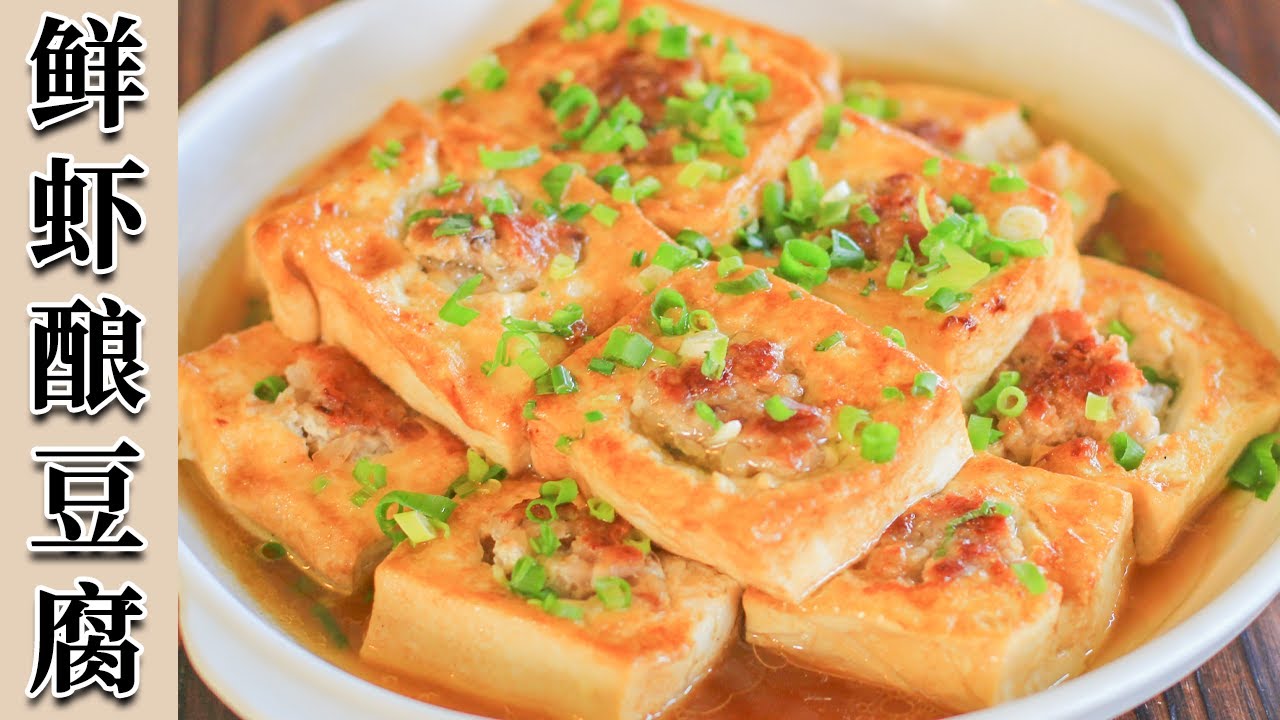
Welcome to the heart of Hakka cuisine! Stuffed Tofu (Yong Tau Foo) is arguably the most iconic and beloved dish of the Hakka diaspora across Southeast Asia. This humble yet ingenious dish transforms simple soybean curd into an exquisite culinary canvas by meticulously stuffing the hollowed pockets with a savory, highly seasoned mixture of minced pork, fish paste, and sometimes aromatic salted fish. Whether prepared traditionally by pan-frying to achieve a crispy golden crust or gently simmered in a light, nourishing broth, Stuffed Tofu (Yong Tau Foo) offers a delightful contrast of smooth, tender tofu and a richly seasoned, firm filling. This dish is the epitome of Hakka resourcefulness, turning economical ingredients into the ultimate comfort food. This comprehensive guide will walk you through the preparation of this traditional favorite, highlighting the techniques needed to achieve the perfect texture and authentic flavor profile. Discover why this classic preparation has captivated palates globally and become synonymous with authentic Hakka cooking.
Origin & History
The origins of 酿豆腐 (Niàng dòufu), or Stuffed Tofu (Yong Tau Foo), are intrinsically linked to the history of the Hakka people—a migrating group known for their resilience and ingenuity. When the Hakka migrated from northern China to the resource-scarce south, and subsequently throughout Southeast Asia, they carried their culinary traditions with them. Legend holds that the dish was born out of a desire to recreate the beloved northern Chinese dumplings (jiaozi) or meatballs, which required scarce wheat flour for wrappers. Tofu, readily available and affordable in the south, became the ingenious substitute for the dumpling exterior.
The meat filling, often seasoned robustly to maximize flavor, was ‘stuffed’ into the carved pockets of tofu, leading to the name “Niang” (酿), meaning “to stuff” or “to brew.” This clever adaptation maximized protein intake while remaining economical, cementing its status as the quintessential Hakka signature dish. Its preparation symbolizes the Hakka people’s tenacity and ability to adapt cherished flavors using local ingredients.
Nutritional Benefits
Stuffed Tofu (Yong Tau Foo) is an excellent source of lean, plant-based and animal protein, derived from the soybean curd and the quality filling used. Tofu itself is rich in essential amino acids, iron, and calcium, and contains beneficial isoflavones, which are associated with promoting cardiovascular health. When prepared by steaming or simmering in broth, as is the preferred traditional method, the dish is naturally low in saturated fat. The typical inclusion of fresh ingredients like water chestnuts and shiitake mushrooms adds beneficial dietary fiber and trace minerals, making this a balanced and nourishing meal choice that supports muscle health and overall well-being.
🥢 Ingredients
- Firm Tofu (Lao Doufu or “Old Tofu”)
- Minced Pork (preferably 70/30 lean-to-fat ratio)
- Fish Paste or Mackerel
- Dried Shiitake Mushrooms (rehydrated and minced)
- Water Chestnuts (chopped, for crunch)
- Shaoxing Rice Wine, Soy Sauce, Sesame Oil
- White Pepper and Salt
- Cornstarch (for binding)
🔥 Instructions
- Prepare the filling: Combine minced pork, fish paste, minced mushrooms, water chestnuts, and seasonings. Mix vigorously in one direction until the paste is sticky and emulsified.
- Prepare the tofu: Slice tofu blocks into desired shapes and carefully scoop out a pocket in the center using a small spoon. Dust the inside cavity with cornstarch.
- Stuff the tofu: Use a small knife or spoon to pack the filling firmly into the tofu pockets, ensuring the filling is flush or slightly mounded.
- Sear (Optional): Lightly pan-fry the stuffed side of the tofu until the meat filling is golden brown and sealed.
- Cook: Transfer the stuffed tofu to a wok and braise in a light chicken or pork broth until the filling is cooked through (about 10-15 minutes). Alternatively, steam until tender.
- Serve hot, drizzled with a savory soy sauce reduction or chili sauce.
👨🍳 Pro Tips
- **The Perfect Tofu Choice:** Always use ‘Old Tofu’ (Lao Doufu). It has a lower water content than soft tofu, ensuring it holds its shape during the hollowing and cooking process without crumbling.
- **Stuffing Emulsification:** To prevent the filling from falling out while cooking, mix the meat/fish paste rigorously in one direction until it becomes sticky (forms an emulsion). Adding a tablespoon of iced water during the final mixing step also helps achieve the perfect bouncy, ‘Q’ texture.
- **The Cornstarch Seal:** Before stuffing, dust the inside cavity of the tofu with a thin layer of cornstarch. This acts as glue, ensuring the filling adheres securely to the tofu wall during frying or braising.
- **The Initial Sear:** Even if you plan to braise, quickly searing the stuffed side of the tofu first creates a ‘golden seal.’ This locks in the moisture and flavor of the stuffing and provides a pleasing texture contrast.
- **Braising Liquid Flavor:** Never use plain water for braising. A simple broth made from dried anchovies, soy sauce, and a touch of mushroom water elevates the dish, allowing the tofu to absorb maximum umami flavor as it cooks.