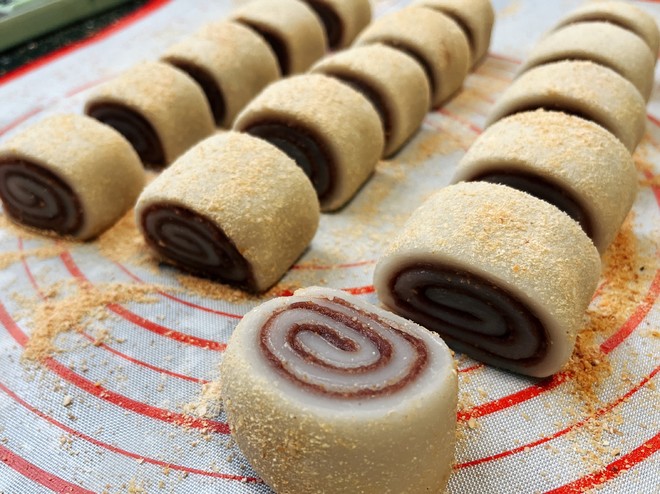
Searching for an authentic taste of Beijing? Look no further than the legendary Rolling Donkey Cake (Lü Da Gun). This iconic traditional snack, deeply rooted in Northern Chinese cuisine, offers a unique textural experience that captivates every palate. Made primarily from a soft, sweet base of steamed glutinous millet or sticky rice flour, it is slathered with sweet red bean or jujube paste, rolled into a log, and then the critical step—generously coated in finely ground, golden-yellow roasted soybean flour. The name itself, “Rolling Donkey Cake,” is a playful reference to the final coating process, reminiscent of a donkey rolling in dust, kicking up a cloud of powder. It’s sweet but not cloying, chewy yet incredibly tender, making it a perfect accompaniment to traditional Chinese tea. Discover how to recreate this delightful piece of edible history, a must-try for any fan of authentic Jing Cai (Beijing cuisine). This comprehensive guide covers history, preparation, and expert tips to ensure your homemade Rolling Donkey Cake is flawless and truly authentic.
Origin & History
The history of Rolling Donkey Cake (Lü Da Gun) is deeply intertwined with the culinary heritage of old Beijing. While often associated with the common street vendors and temple fair snacks, its quality and refined technique suggest roots stretching back into the imperial kitchens of the Qing Dynasty, or at least being heavily patronized by the upper classes who demanded high-quality pastries.
The whimsical name, 驴打滚, translates literally to “donkey rolling.” The popular legend states that when the long, sticky glutinous rice log is tossed into the large flat basin containing the roasted soybean flour, the powder clouds up and coats the dessert completely, much like a donkey rolling and kicking up yellow dust or sand. This imagery stuck, naming one of Beijing’s most cherished desserts. Regardless of the exact origin, the preparation technique—steaming the dough, spreading the filling, and expertly rolling it in the fine soybean powder—has remained virtually unchanged for centuries, cementing its place as one of the ‘Eight Traditional Snacks of Beijing’ and a required item for traditional celebrations.
Nutritional Benefits
Rolling Donkey Cake, while a delicious sweet indulgence, offers surprising nutritional value derived primarily from its coating. The toasted soybean flour (Kougou Mian) is an excellent source of plant protein, dietary fiber, and essential minerals such as iron and calcium, promoting digestive health. The glutinous rice base provides complex carbohydrates, offering a rapid and sustained energy source. When prepared with traditional fillings like red bean paste, the snack is fortified with additional fiber and antioxidants. As with most desserts, moderation is recommended due to the sugar content, but this Beijing treat is certainly a flavorful way to incorporate soybeans into your diet.
🥢 Ingredients
- 150g Glutinous Rice Flour
- 100ml Warm Water
- 2 tbsp Granulated Sugar (for the dough)
- 200g Sweet Red Bean Paste (or Jujube Paste)
- 50g Roasted Soybean Flour (Kougou Mian)
- Oil (for hands and board)
🔥 Instructions
- Prepare the Dough: Mix the glutinous rice flour, sugar, and warm water until a smooth, slightly sticky dough ball forms.
- Steam the Dough: Place the dough in a lightly oiled, heat-safe dish. Steam over high heat for 20-25 minutes, or until the dough is translucent and cooked through.
- Flatten and Fill: While the dough is still hot, transfer it to a large, lightly oiled or plastic-wrapped cutting board. Press or roll the dough into a thin, rectangular sheet (about 1/4 inch thick).
- Spread the Filling: Evenly spread the red bean paste over the dough, leaving a small 1-inch border on all sides.
- Roll and Coat: Starting from the long edge, tightly roll the dough into a log. Dust a separate surface generously with the roasted soybean flour (Kougou Mian). Roll the glutinous rice log in the flour until completely and evenly coated.
- Slice and Serve: Trim the ends and slice the log into bite-sized pieces (about 1.5 inches thick). Serve immediately.
👨🍳 Pro Tips
- The Perfect Dough Texture: For maximum softness, always steam the glutinous rice dough immediately after mixing. Covering the steaming dish prevents the dough surface from drying out and forming an undesirable crust.
- Achieving Maximum Stickiness: Handle the dough while it is still warm. Cold glutinous rice is extremely stiff and hard to work with. Use a small amount of oil on your hands and working surface to prevent sticking, rather than excessive dry flour.
- The Soybean Flour Secret (Kougou Mian): The flavor of the roasted soybean flour is critical. If your store-bought flour tastes raw, lightly toast it in a dry pan until it is deeply fragrant and golden brown. Sifting the flour ensures a uniform, fine coating.
- Tightly Uniform Rolls: To prevent the filling from squeezing out and ensure aesthetically pleasing slices, chill your red bean paste slightly before spreading, and roll the dough very tightly and deliberately.
- Avoid Overfilling: Do not spread the filling too thickly. A thick filling increases the moisture content, making the dough more prone to tearing and harder to roll without deformation.